Climate of Change

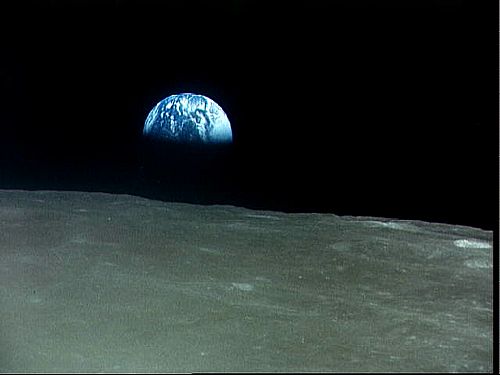
Earth from Apollo In honor of Neil Armstrong

One of the more controversial topics of our current time is climate change. One group which includes the vast majority of climate scientists believes recent climate change is occurring and is primarily caused by greenhouse gases produced by humans. Another group, smaller in number but vocal, doubts whether the climate is changing very much by human activity. We will refer to the second group as skeptics rather than “denialists”,

I find myself in a somewhat odd position much like that of the late Alexander Cockburn. I really don’t fit the mold. While I generally believe in a very progressive political agenda, I maintain a degree of skepticism about the accepted climate science, although I do not agree with Cockburn’s belief about most of our rising carbon dioxide levels in our atmosphere being part of a natural process. My skepticism is not a complete rejection of climate science but more of a rejection at the edges. In other words, I think something other than greenhouse gases is having an effect on climate change even if greenhouse gases may be the predominant driver. It may be solar influences, natural variations , galactic cosmic rays, or something else we don’t understand but I don’t accept that all of current warming is the result of green house gases. This is not a particularly radical or skeptical position. Most climate scientists leave some role for solar influences particularly over the long-term and there is still a good deal of debate about how much natural variability is behind recent warming even if the general consensus is not very much.

Continue reading

Posted in Climate change, Futurism | 4 Comments

Julian Huxley and a New Animism

Julian Huxley

Julian Huxley

As a child, I had the typical conception that a child has of God. It was always somewhat vague but corresponded more or less to some male human-like entity that resided in Heaven, wherever that was, who protected me and loved me as long as I obeyed him. This God was peculiar to people of my religion which at the time was Southern Baptist, mainly because a Southern Baptist church was about a block away from my home. As I grew older I began to read various Eastern philosophies and began to think of God as the primary creative force in the universe and a central concept that lay at the core of all religions. Older still I entered a period of skepticism not much different from that of Richard Dawkins in the God Delusion (1). In this period, God became at best an unnecessary hypothesis that added nothing to our understanding of the world which we could best comprehend through science. Older still I became more confused. I couldn’t believe in the God of most religions and certainly didn’t want to toss aside science, yet I still felt there was something more to the world than science by itself could explain. Depending upon the discussion I might call this something God or simply ignorance, but the something was there.  Sometime during this period of confusion (that continues even somewhat until today), I discovered Julian Huxley and evolutionary humanism.

Continue reading

Posted in Consciousness, Futurism, Human Evolution, Transhumanism | 8 Comments

Why the Future Needs Us Part II

By Wing-Chi Poon (Own work) [CC-BY-SA-3.0 (www.creativecommons.org/licenses/by-sa/3.0)], via Wikimedia Commons

Life finds a way – Prof. Ian Malcolm, Jurassic Park

 The last question was asked for the first time, half in jest, on May 21, 2061, at a time when humanity first stepped into the light. – Isaac Asimov, The Last Question

As a youth, I remember stepping on a puffball in a field near where I grew up in Virginia. Puffballs are a sort of roundish mushroom without a cap or gills. Almost all of them are edible, although without a distinctive taste, when they are young and pure white inside. As the spores mature, the inside of puffballs form a mass in the center of the fruiting body. Eventually the covering of the puffball dries and shrivels and an opening develops in the top. At that point, the slightest provocation will trigger the release of the spores from the opening and cast them to the four winds. According to David Arora (1), a large puffball may contain seven trillion spores. On this day in my youth, I played my part in the propagation of the puffball. At the time, I saw something that looked like brown dust coming from the top of a odd looking sac . It was the puffball finding its own way to spread itself.

Continue reading

Posted in Futurism, Human Evolution, Robotics, Time | 7 Comments