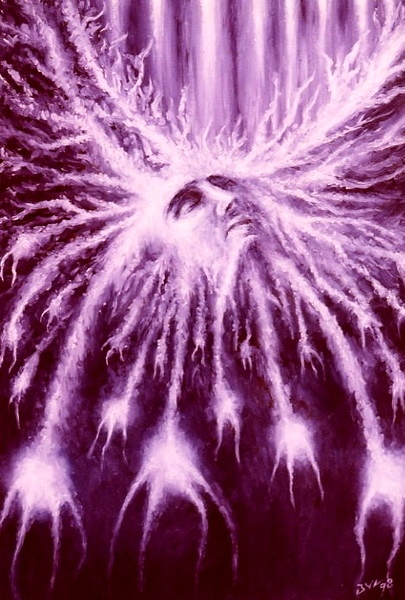
The Astral_Sleep by Jeroen van Valkenburg from Wikipedia
In my last post, I declared myself a materialist and posed the question: What kind of material is mind? Any one who read to the end of the post would realize that my declaration as a materialist was something of a trick and in the end I write that “the materialist argument has buried within it a deep secret. There is really no matter. What we think is material is structure – from the atom to the mind. If consciousness is material then the material would be in some sense conscious. Consciousness is one of the optimal solutions for matter to organize itself in space and time.”
Here I would like to continue my exploration about the material of mind. Continue reading