Lost History: Revenge of the Nerds

About 1.8 million years ago Homo erectus, one of the better known ancestors of humans, emerged and developed what is known as the Acheulean tool tradition. Although Homo erectus had a cranial capacity close to the lower range of modern human and may have had many human-like social characteristics, the tools never become more complex than simple scrapers, choppers, and stone axes. They change little over the next million and a half years.

Mozart wrote his symphony No. 41 in about two weeks from late July to early August in 1788. Sir George Grove declared it “the greatest orchestral work of the world which preceded the French Revolution.” The symphony, nicknamed the Jupiter symphony, was his last symphonic work and one of three symphonies composed in a short time frame in the summer of that year. The full arrangement has parts for eight instruments and spans over a hundred pages.

How did we get from Homo erectus to Mozart?

Continue reading

Posted in Brain size, Consciousness, Human Evolution | 5 Comments

Floating


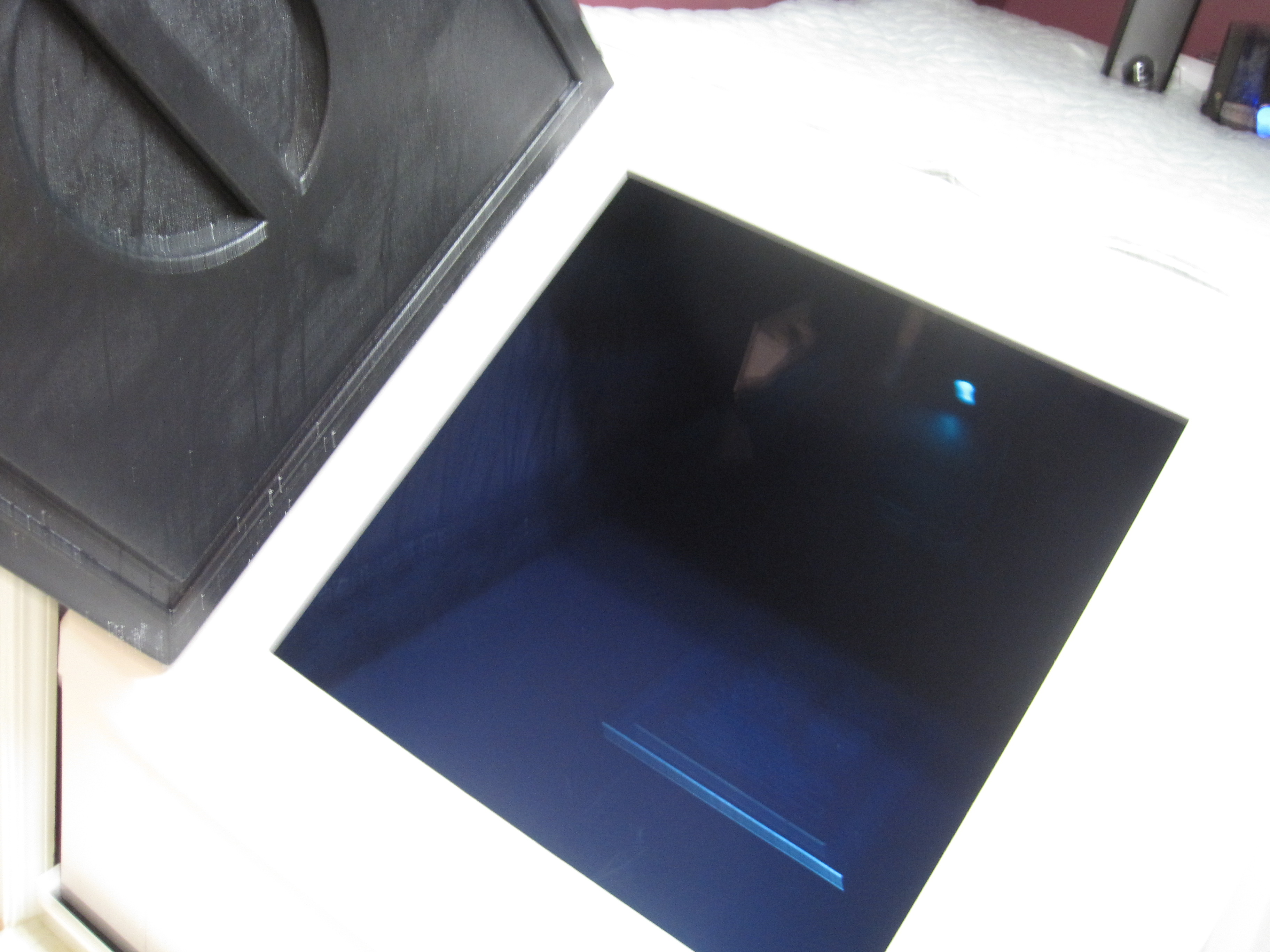
Flotation Tank Courtesy Harmony Yoga & Wellness Center, Tucker, GA 30084

“When one realizes one is asleep, at that moment one is already half-awake.” ― P.D. Ouspensky

In 1951, the composer John Cage entered a anechoic chamber at Harvard University. An anechoic chamber is a specially designed room to stop sound and electromagnetic waves. Needless to say, the room is quiet. One of such rooms in 2005 was designated by the Guinness Book of World Records as the quietest place on Earth. Of course, the room is only quiet as long as nobody is in the room. When Cage entered the room, he heard two sounds. One of them was the sound of his nervous system in operation and the other the sound of his blood circulating. Cage wrote of the experience: “Until I die there will be sounds. And they will continue following my death. One need not fear about the future of music.” (1) The experience inspired his famous composition 4’33” which consists of a pianist doing nothing but opening and closing the lid of the piano to mark the three movements of the piece for four minutes and thirty-three seconds. The music is not what the pianist played (or didn’t play) but the sounds of four minutes and thirty-three seconds.

In 2011, I entered a flotation tank for the first time. I had been interested in flotation tanks for years. I believe I first became aware of them reading something by John Lilly, one of the pioneers in the study of sensory deprivation. The early tanks Lilly worked with were complicated affairs that required breathing apparatus and assistance getting in and out of the them. If you ever have seen the movie Altered States, a movie by Ken Russell from a novel loosely based on John Lilly’s research by Paddy Chayefsky, you have an idea what was involved. The main character in the movie played by William Hurt mixes some psychedelic agents into the experience, as did Lilly, and deconstructs back to some original human form and eventually back to the primordial glop from which the universe was created.

Continue reading

Posted in Brain size, Consciousness, Human Evolution | 4 Comments

Climate of Change

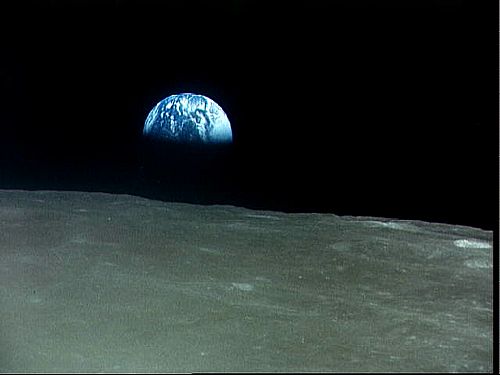
Earth from Apollo In honor of Neil Armstrong

One of the more controversial topics of our current time is climate change. One group which includes the vast majority of climate scientists believes recent climate change is occurring and is primarily caused by greenhouse gases produced by humans. Another group, smaller in number but vocal, doubts whether the climate is changing very much by human activity. We will refer to the second group as skeptics rather than “denialists”,

I find myself in a somewhat odd position much like that of the late Alexander Cockburn. I really don’t fit the mold. While I generally believe in a very progressive political agenda, I maintain a degree of skepticism about the accepted climate science, although I do not agree with Cockburn’s belief about most of our rising carbon dioxide levels in our atmosphere being part of a natural process. My skepticism is not a complete rejection of climate science but more of a rejection at the edges. In other words, I think something other than greenhouse gases is having an effect on climate change even if greenhouse gases may be the predominant driver. It may be solar influences, natural variations , galactic cosmic rays, or something else we don’t understand but I don’t accept that all of current warming is the result of green house gases. This is not a particularly radical or skeptical position. Most climate scientists leave some role for solar influences particularly over the long-term and there is still a good deal of debate about how much natural variability is behind recent warming even if the general consensus is not very much.

Continue reading

Posted in Climate change, Futurism | 4 Comments